What is Powerplay in Cricket
Cricket is constantly growing worldwide and is now present on every continent, with more than 100 countries belonging to the International Cricket Council (ICC) as associates. One of the best ways to increase the popularity of the sport is to make matches more exciting. Powerplay plays an essential role in this, as it allows for the development of advanced strategies during the game, increasing both the importance of tactics and the number of runs scored by teams.
Therefore, in the faster formats of cricket, T20 and ODI (One Day International), this rule is applied to make the game more exciting and appealing to spectators. Here, you will understand everything about powerplay. Knowing this is essential for those who like to place online bets on cricket using 1xBet, which is a leading bookmaker in India and throughout Asia.

Powerplay meaning in Cricket
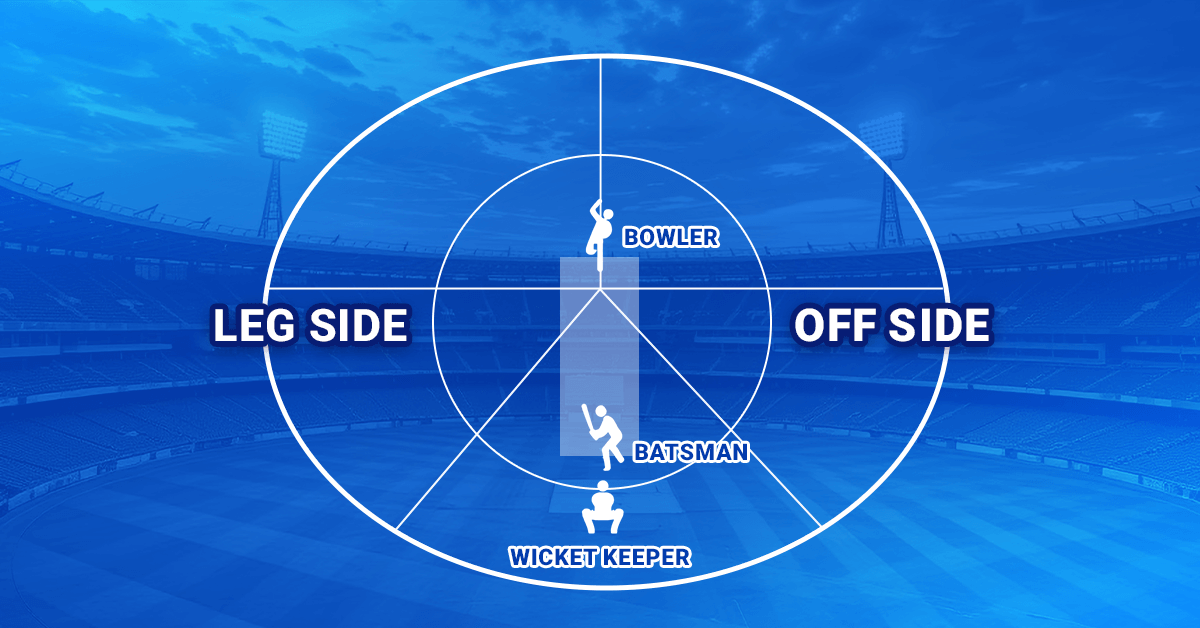
The cricket power play meaning is a phase of the match in which there is a limitation on the number of players who can stay outside the 30-yard circle. The number of players depends on the moment. Usually, at the beginning of each innings, fewer players can stay outside the circle, and as the overs progress, the number increases.
When this occurs, the batting team has a much better chance of scoring runs. After all, limiting the number of players outside the circle directly affects the team's fielding structure and makes life difficult for the defence.
Therefore, during overs with powerplay, the number of runs is considerably higher. Teams that make the most of this phase of the match have a significant advantage. Thus, coaches and captains create specific strategies for Powerplay, putting in their best batsmen and carefully planning the field placement to balance attack and defence. That is why teams usually start with their best batsmen right at the beginning of the match, as the initial powerplays allow fewer players outside the 30-yard circle. It is worth remembering that each over is a set of 6 legal balls thrown by the bowler.
Powerplay emerged in the 1980s, starting in Australia, and only in ODI matches. With the success of the initiative to increase the attractiveness of the sport, the rule was gradually implemented around the world. In 2005, the International Cricket Council named the rule Powerplay. After several adaptations, we arrived at the rules that are currently in force, and today they apply to T20 and ODI.
Powerplay Rules in Different Formats
Each cricket format has different rules for powerplay. They indicate in which overs there will be a limitation on the number of athletes outside the circle and the number of players allowed in each of these overs. Before explaining the rules, it is worth remembering that powerplay only exists in formats where there is a limit on overs, T20, and ODI (Cricket World Cup format). In Test Matches, there is no such phase of the match.
Now, take a look at the Powerplay rules in ODI. It is worth remembering that in this type, each innings has 50 overs:
First phase - Powerplay 1 - Between overs 1 and 10, only 2 fielders can be outside the circle.
Second phase - Powerplay 2 - Between overs 11 and 40, up to 4 fielders can be outside the circle.
Third phase (final phase) - Powerplay 3 - In the 3 One Day Cricket Powerplay, up to 5 fielders may stay outside the circle.
As you can see from the Powerplay rules in ODI, it is essential that teams start the match at full strength to make the most of the One Day Cricket Powerplay 1, which is when the batting team has the best chance of scoring runs. It is essential to know Powerplay 1, 2 and 3.
In the T20 format, where there are only 20 overs, the Powerplay is even more important. After all, the most decisive phase of the Powerplay occupies 30% of the innings. Here's how it works:
Between overs 1 and 6, only 2 fielders may remain outside the circle.
Between overs 7 and 20, 5 fielders may remain outside the circle.
Powerplay also exists in a slightly less well-known form of cricket, which is 100-ball cricket. In this case, the first 25 legal balls of each innings allow only 2 fielders outside the circle, while for the remaining balls, 5 fielders can stay outside the circle.
Types of Powerplay in Cricket
Considering the ODI format, which is the form in which Powerplay was established, there are three main types of Powerplay.
In the first, only two players can remain outside the circle. At this point, it is essential to have the best batsmen to take full advantage of the other team's mandatory weakness.
Then there is a long middle phase, which lasts 60% of the match, in which 4 fielders can remain outside the circle. At this point, it is essential to balance the strategy, mixing boldness and conservatism.
Finally, there is the final phase of Powerplay, in which 5 fielders are allowed outside the circle. As it is at the end of the innings, this phase is decisive, and batsmen have to be much more careful.
In a few competitions, there is yet another type of Powerplay, in which team captains select a few overs to apply the restrictions on fielders outside the circle. In this cup, the importance of strategy is even greater, and the right choice can decide a match.
Powerplay Strategy for Batting and Bowling
Powerplay strategies vary greatly between batting and bowling attack teams, especially in terms of fielding tactics and bowler selection. Knowing how to apply the right strategy is key to winning the match.
For batting teams, it is necessary to start with aggressive batsmen who can establish a good variety of shots. It is also necessary for them to plan all their shots according to the rotation of the bowlers, knowing the characteristics of each one.
For the bowling team, overs with the most restrictive Powerplays should feature bowlers who can throw balls with swing, making it difficult for the batsman to hit. It is also necessary to vary the bowls a lot to prevent the batsman from preparing according to the analysed patterns.
Understanding all these strategies is crucial for anyone who likes to bet on 1xBet Cricket. This knowledge will bring many advantages, especially in live betting.
FAQ
How many overs in powerplay in ODI?
In ODI, all 50 overs have Powerplay, but they are divided into 3 phases. In the first, which lasts between overs 1 and 10, only 2 fielders are allowed outside the circle, which is the most critical phase. In the second, between overs 11 and 40, 4 fielders are allowed. In the final Powerplay, between overs 41 and 50, 5 fielders are allowed outside the 30-yard circle.
How many fielders are allowed outside the circle during powerplay?
The number of fielders allowed outside the circle in Powerplay depends on the phase of the rule. However, in the most critical powerplay, which usually occurs at the beginning of the match, only 2 fielders are allowed outside the circle.
Is there powerplay in Test cricket?
No. Powerplay is only used in cricket formats with a limit on overs in each innings, especially T20 and ODI.
What is the difference between powerplay in T20 and ODI?
The difference in Powerplay between T20 and ODI is the length of the most critical phase, in which only two fielders can remain outside the circle. In ODI, this phase lasts between overs 1 and 10, in 20% of overs. In T20, the phase lasts between overs 1 and 6, in 30% of overs.