What Is Offside In Football
Offside is one of the most important rules in football, yet it is one of the most complicated to understand for those who do not follow the sport closely and are just starting to appreciate it. As all goals must comply with the rule, it is extremely decisive in matches and the decision on whether a goal is legal or not can come down to millimetres. This also leads to defensive strategies that can make all the difference in a match.
Aware of the importance of the rule, we will cover its details here. We will provide practical examples, the changes that the Video Assistant Referee (VAR) has brought to offside analysis, and how the rule impacts football betting, also with real-life examples.
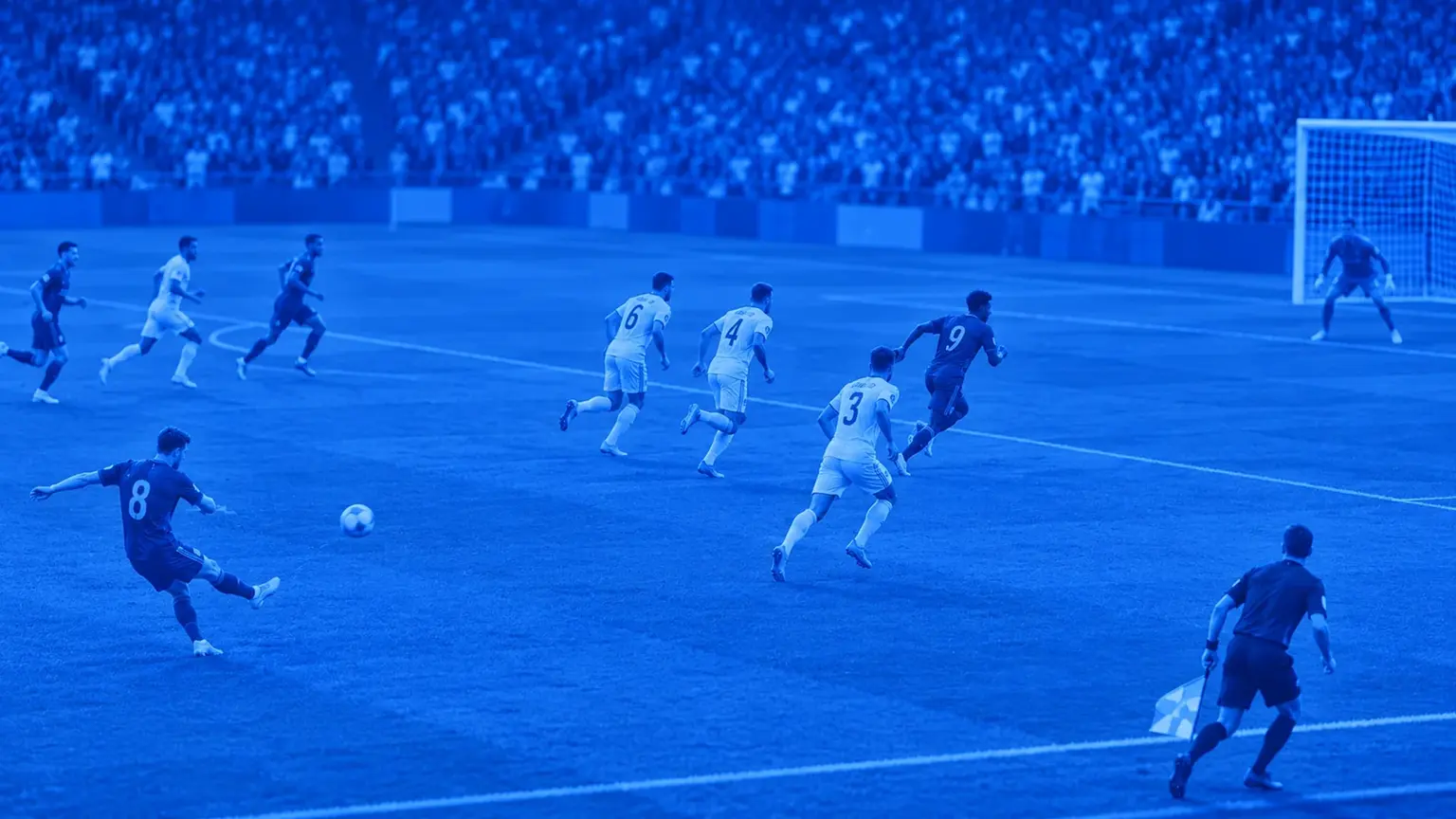
Offside Meaning in Football - Simple Explanation
In very simple terms, offside is a rule created to prevent attackers from simply waiting isolated near the opposing penalty area to receive the ball unmarked. This would completely change the game, as a defender would also have to remain pinned in their own defensive half, eliminating the dynamism of teams.
For this to occur, the attacking player must always be behind at least two opposing players, including the goalkeeper, at the moment the ball is passed, if the player is ahead of the halfway line. The hands and arms do not count, only the head, body, and feet. The rule is only valid for players in the attacking half, ahead of the halfway line. It is worth noting that this is the simple terms, but the full text is considerably more complex and includes exceptions and other specifics.
This generates defensive strategies, most notably the offside trap, which is exhaustively practised by defenders. The idea of the offside trap is to always track the line of the most advanced attacker and, when sensing the ball will be passed to them, step forward and leave the player in offside.
What is the Meaning of Offside in Football - The Offside Rules Full Breakdown
It’s simple to understand what does offside mean in football. The basic part of the offside is that the attacking player receiving the ball must have their head, body, and feet behind at least two defenders if they are ahead of the ball line and ahead of the halfway line. In the case of defenders, what is also analysed is the head, body, and feet. The official text of the rule by the International Football Association Board (IFAB) is therefore as follows:
"A player is in an offside position if:
Any part of the head, body or feet is in the opponents' half (excluding the halfway line) and
Any part of the head, body or feet is nearer to the opponents' goal line than both the ball and the second-last opponent"
There are three situations in which the offside rule does not apply:
When the ball is played directly from a goal kick
When the ball is played from a throw-in
When the ball comes from a corner kick
A player in offside cannot:
Participate directly in play by touching the ball.
Participate indirectly in play by interfering with an opponent's ability to contest the ball.
Participate in play by blocking the goalkeeper's line of vision.
Contest the ball with an opponent.
The pass that results in offside does not need to be direct. The moment of contact with the ball is valid for offside in the following cases:
When the ball is deliberately saved by the goalkeeper or a defender
When the ball hits the post and comes back to the attacker in offside.
Another very important point is that when the ball is touched by an opposing player there is no offside. This may not apply to balls accidentally deflected or rebounded, and this is normally a subjective decision for the main referee.
A football match has two specific officials for offside, one on each side of the pitch. This is the linesman, who must always run laterally tracking the position of the defensive line to spot when offside occurs. Upon seeing an offside situation, they raise their flag, the game is stopped, and restarted with a free kick for the opposing team.
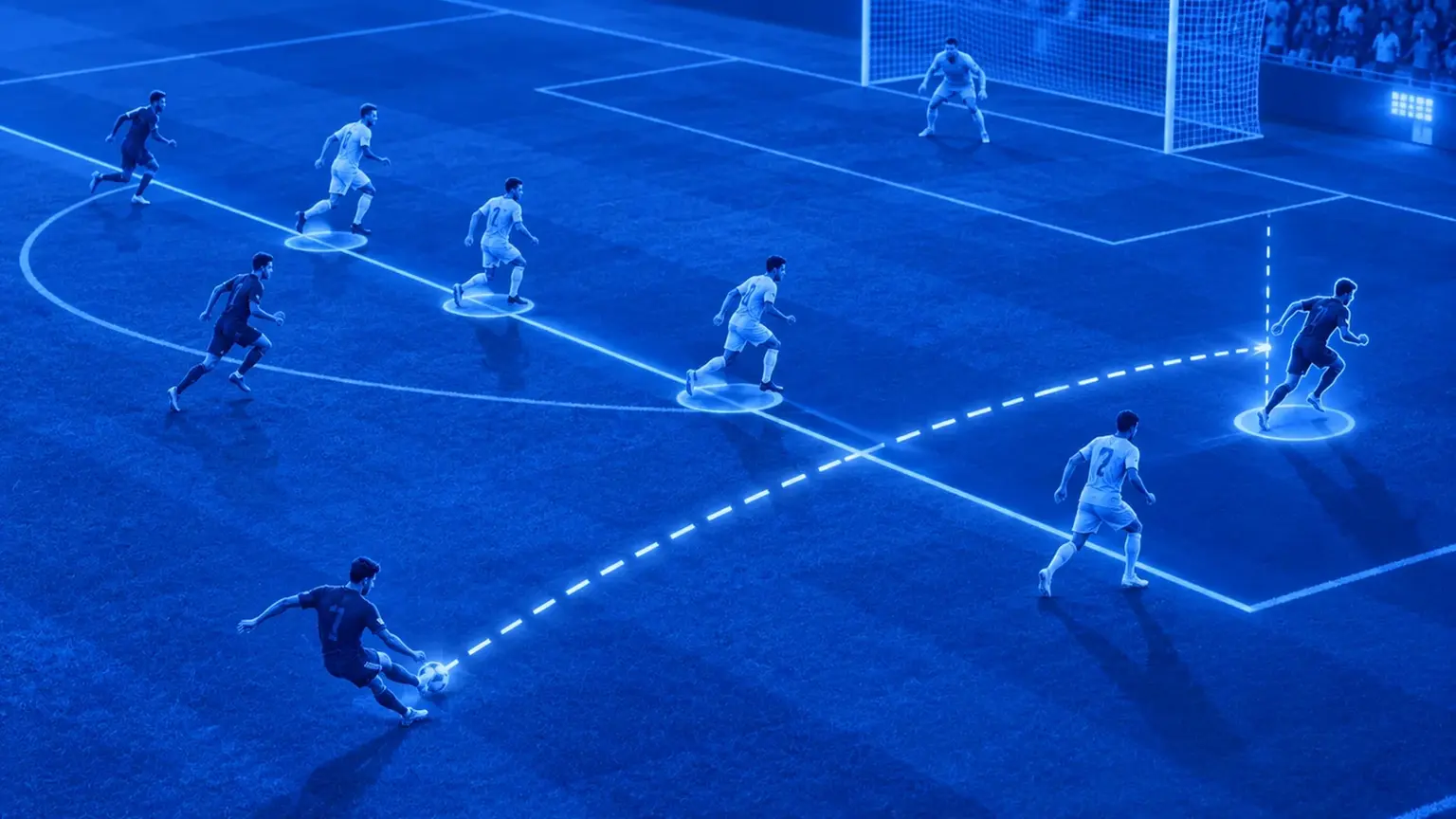
The following image shows a player (in green and white) who is offside, since he is ahead of the defender's line.
Offside in Soccer - How VAR Changed the Game
The Video Assistant Referee completely changed the dynamics of offside decisions. Today, the recommendation is that the linesman flags offside on the pitch only in situations where the attacker is clearly advanced. In doubtful situations due to the small distance involved, the recommendation is for the game to continue and, in the event of a goal, for the situation to be reviewed by the video team.
All goals scored in matches with Video Assistant Referee are reviewed to check whether there is an offside at any point during the play. Initially, the video referees drew lines manually, one at the furthest point of the head, body, or feet of the second-last defender and one at the head, body, or feet of the attacker. If the attacker's line is ahead of the defender's line, offside is called. The Video Assistant Referee was also responsible for analysing the video frame by frame to check the exact moment of contact with the ball.
Today, however, major leagues that invest in Video Assistant Referee technology have semi-automatic offside, which is much faster and avoids long stoppages in the match while referees draw lines. In this mode, the ball has a chip that automatically recognises the moment the ball is played, ensuring greater accuracy. Cameras spread throughout the stadium then generate a 3D animation that shows exactly the line of the second last defender compared to the attacker's and immediately indicates whether offside occurred or not. Here is what the semi-automatic offside image looks like:
Before Video Assistant Referee, the offside rule was responsible for countless controversies in football, with many legal goals being disallowed and many illegal goals being awarded. Some of the most significant were:
Match | Errors |
Corinthians vs. Boca Juniors for the round of 16 of the 2013 CONMEBOL Libertadores | Referee Carlos Amarilla disallowed two legal Corinthians goals against Boca Juniors, which ultimately led to the Brazilian club's elimination. |
Manchester United vs. Chelsea for the 2009/2010 Premier League | An illegal Didier Drogba goal gave Chelsea a 2-1 win against Manchester United, who were ultimately overtaken and lost the EPL title. |
Spain vs. Portugal for the round of 16 of the 2010 FIFA World Cup | Spain's 2010 FIFA World Cup title could have been different, as in their 1-0 victory against Portugal in the round of 16, David Villa's goal was in offside. |
Even with Video Assistant Referee, offside still causes controversy. One such case is Lionel Messi's goal in the 2022 World Cup final against France, which many people still debate because it was extremely marginal. Another case was Haaland's recent goal in the 2026/27 Premier League, in which Enzo Fernández was offside and contested the ball, but the referee only considered the Norwegian striker and allowed the goal.
How Offside Affects Football Betting
After understanding what is offside in soccer, it's possible to apply this in sports betting in India. The main way offside affects football betting relates to the closure of all betting markets while player lines are being checked by Video Assistant Referee. In the case of semi-automatic offside, the process is quick, but with manual VAR the drawing of lines can take minutes. As it is a situation that directly affects the result, no bookmaker users such as those at 1xBet can place bets during play reviews.
In addition, there are also betting markets directly related to this. In major matches with many available markets, it is possible to bet on the total number of offsides in the game and, in some cases, even on the total offsides of a specific player, always in the Over/Under system.