What Is VAR In Football
The Video Assistant Referee (VAR) was the biggest revolution in modern football. The conducting of tests with the technology was approved by the International Football Association Board in 2016 and in the same year began to be tested in lower leagues. Global implementation came with the 2018 FIFA World Cup, as the planet's biggest competition ends up influencing all others. Today, it is present even in small championships and, at the 2026 FIFA World Cup, gained some additional responsibilities.
Here, you will understand in detail what is video assistant referee in football and how VAR works, with explanations of cases in which it can act to assist the referee. We will also show what impact VAR has on online football betting and what all bettors should know about it.
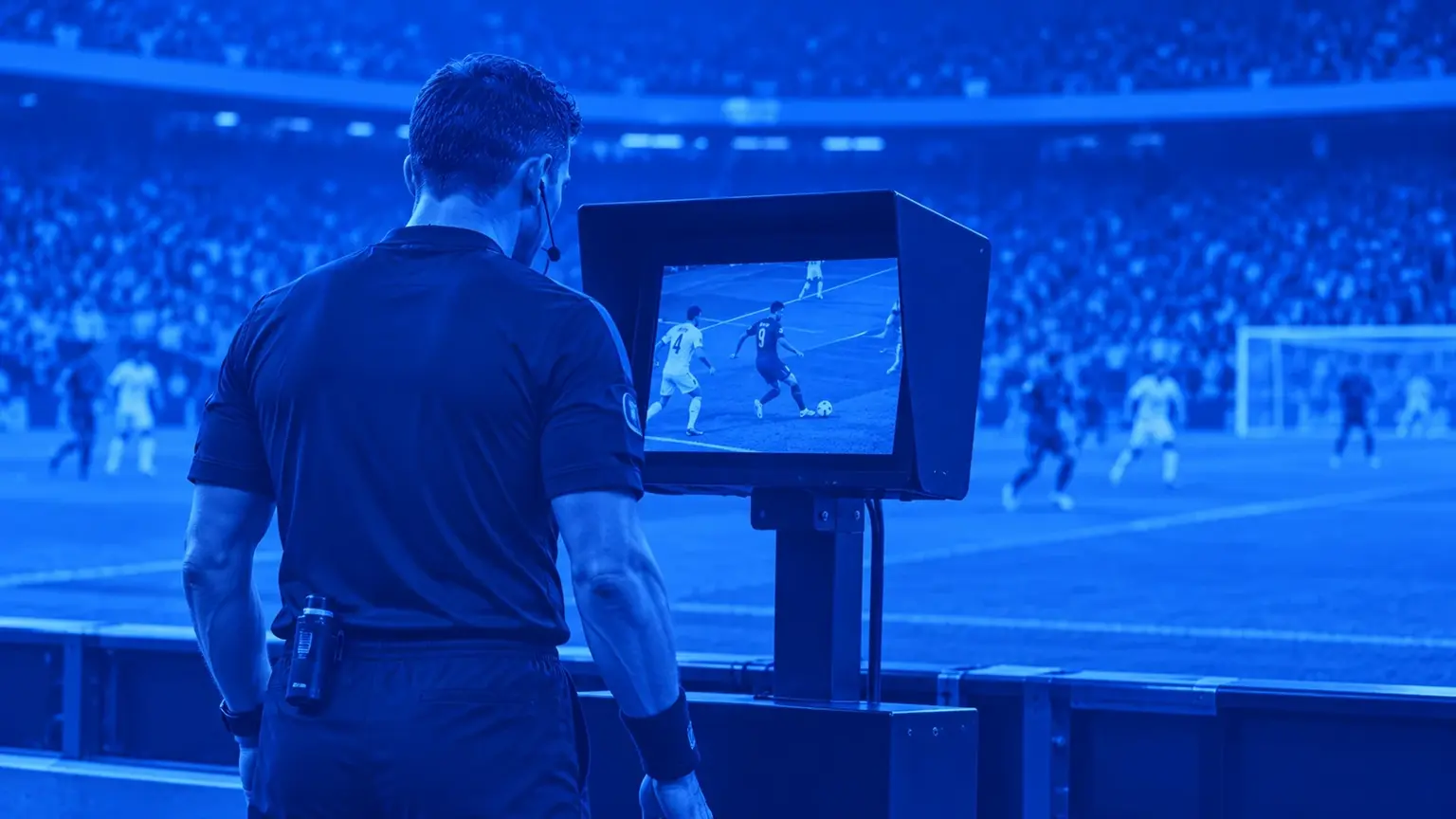
VAR Full Form and Meaning in Football
VAR is a measure to reduce refereeing errors in football matches. Its implementation was controversial, as many believed that imperfection was part of the beauty of the sport. However, from the moment it began to be used, the acceptance increased.
In short, the video referee intervenes in key moments of the match, not in just any error. It only serves to correct clear errors by the on-field referee in situations of enormous impact, such as goals and red cards. Even so, there are some controversies regarding the VAR, mainly due to the time it takes from matches when decisions take a long time to be made. It is therefore worth looking at the pros and cons of the Video Assistant Referee.
Pros | Cons |
Greater fairness in matches at crucial moments | Controversy decisions can take a long time to be made, interrupting the match and breaking the flow of the game with the delay |
Intervention is only in specific moments and to correct clear errors | Even after watching the video, many resolutions are subjective and there is controversy between the opinion of the VAR and the on-field referee |
The video has eliminated a large proportion of simulation and also discourages violent play, as VAR can act in red card situations | In many cases, fans and players celebrate a goal and after a long time it is disallowed, breaking the pace of the match |
How Does VAR Technology Work in Football
How VAR works is straightforward to understand:
All moments eligible for review are analysed by the team in the VAR booth.
When the video referees find a moment they believe should be corrected, they inform the on-field referee through the communication earpiece used by the refereeing team. This must be done before the ball is back in play.
The main referee goes to the pitchside monitor and watches the incident, freely requesting other camera angles.
The main referee makes the decision. If there is any change, they make the VAR gesture and alter the decision they had made. If there are no changes, the referee continues the game normally. In major championships, the decision must be communicated to all fans in the stadium and viewers through the sound system with the referee's microphone.
If the VAR relates to offside in a goal or misidentification errors, the main referee does not need to go to the monitor, as these are factual and not subjective situations. In these cases, they are simply informed through the earpiece and alter the decision.
VAR technology in football can only act in specific situations. When it was implemented, these were the moments in which the video referee could intervene in the main referee's decisions:
Goals - reviewed from the beginning of the play to check for any possible irregularity, whether a foul, ball out of play, or offside. In the offside case, the VAR draws lines to verify each player's position and check whether the position is legal or not.
Penalty - The video referee can act on penalty-related resolutions, such as handball or foul. This includes suggesting that the main referee award a penalty they did not see on the pitch or overturn a foul awarded incorrectly. The final decision always rests with the main referee after watching the incident on the monitor.
Red card - The VAR can suggest a sending-off in a situation where the main referee considered it normal, or suggest the removal of an incorrect red card (card overturned).
Misidentification - The VAR informs the main referee when a card, whether yellow or red, is mistakenly shown to the wrong player, so the card is overturned.
From the 2026 World Cup, VAR gained two new responsibilities. These changes are being gradually implemented in other leagues, which can decide whether to adopt the measures or not. They are:
Correcting a referee if they have awarded an incorrect corner, informing them that the situation was actually a goal kick. The reverse cannot be done, meaning it is not possible to inform that a goal kick was actually a corner situation.
When a player unjustly receives the second yellow card that results in a sending-off, the VAR suggests that the referee reviews the situation. The reverse cannot be done, meaning the VAR cannot recommend that the referee reviews a situation to apply a second yellow card.
The most common use of VAR is the analysis of offsides in goals. The procedure can vary. Initially, the lines were drawn manually by the video referees, which is still done in many leagues. However, leagues that invest more in the technology already have the possibility of using semi-automatic offside. In these cases, there is a chip in the ball that shows the exact moment of contact and the lines are drawn automatically through cameras that cover the entire pitch and capture all necessary angles. A 3D animation showing the position of the athletes is automatically created. This has increased the speed of resolutions and also improved accuracy.
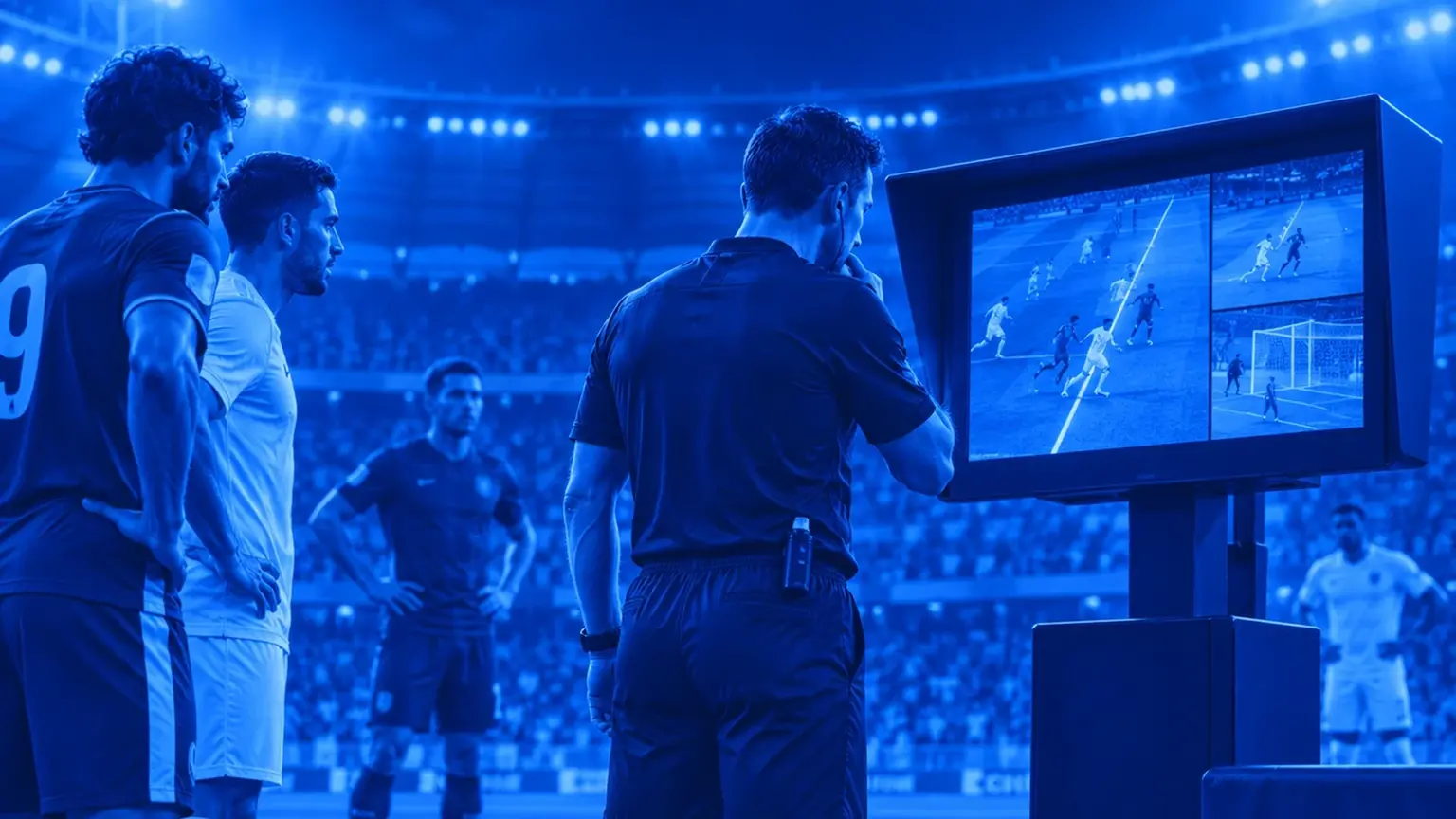
When was VAR Introduced in Football? History and Timeline
The implementation of VAR in football happened gradually. Tests were authorised by the International Football Association Board in March 2016. Initially, VAR was tested in lower leagues so that the impacts could be analysed accurately. VAR was therefore officially used for the first time in August 2016 in the third division of the United States.
However, it became standard from the 2018 World Cup onwards. All major football changes that are tested and approved appear at the World Cup and are then adopted in other leagues. Each of the world's major championships adopted the VAR at the point it deemed necessary, with the main wave coming after the tournament.
The A-League in Australia began using VAR in April 2017.
Major League Soccer in the United States implemented VAR in August 2017.
The German Bundesliga and Italian Serie A were the first major leagues to adopt VAR, from the first round of the 2017/2018 season in August 2017.
After the 2018 World Cup, other major leagues implemented VAR, notably La Liga in Spain and Ligue 1 in France, from the first round of the 2018/19 season in August 2018.
The UEFA Champions League adopted VAR from the round of 16 of the 2018/19 season in February 2019.
The Brazilian Championship began using VAR in the 2019 season, in April.
The Premier League (EPL) was the last of the major leagues to implement the VAR, only in the 2019/20 season which began in August 2019. To this day, the technology faces resistance in EPL.
One of the biggest controversies in VAR history occurred in the 2022 World Cup final, that is, the most important match in world football, between France and Argentina. Lionel Messi's goal, which put Argentina ahead 3-2, was deemed legal based on the lines drawn by VAR, attesting that no offside had occurred. However, the incident was extremely marginal and the French press argued that the decision was wrong.
How VAR Affects Football Betting - What Every Bettor Should Know
Like everything that directly affects the sport, VAR also has a major impact on online football betting in India, especially in live bets.
As VAR resolutions are crucial for the course of the game and, depending on whether a goal is validated or not, whether a sending-off occurs or a penalty is awarded or not, all odds become different. For this reason, at the moment VAR comes into action, all bets are suspended and changes or maintenance of odds only take effect after the decision is made. This occurs at all bookmakers, such as 1xBet.
For example, if a game is 0-0 and a goal is scored but the VAR is reviewing the situation, the odds are completely different depending on whether the goal will be validated or not. If it is awarded, the odds for the win of the team that scored will decrease considerably. If it is disallowed, the odds tend to remain the same. Bets are therefore suspended during the review of the situation.